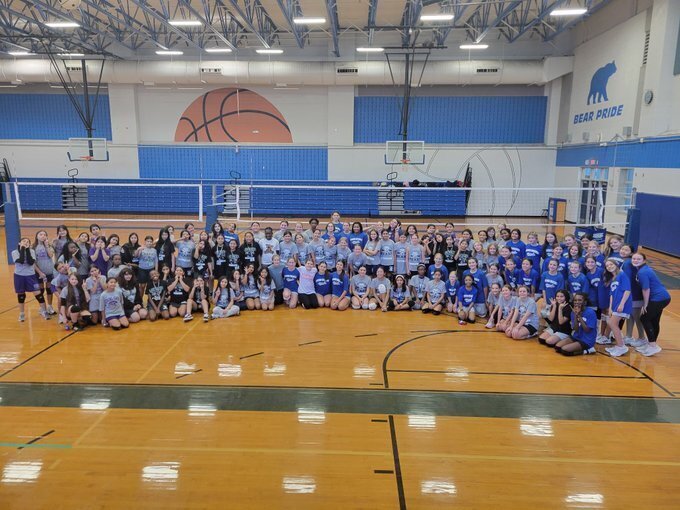
Seventh- and eighth-grade volleyball players from Spring Branch, Spring Oaks and Spring Woods middle schools stepped into coaching roles earlier this semester, helping sixth graders build skills and confidence during a student-led volleyball clinic.
In its third year, the service project gave experienced players a chance to share their skills while giving back to a community that supported them. Younger students learned volleyball fundamentals, made connections across campuses and got a glimpse of middle school athletics.
The clinic brought together about 140 student coaches and participants. Under the guidance of Chenique Whitney, campus athletic coordinator at Spring Branch Middle School, the seventh- and eighth-grade players led stations focused on passing, setting, serving, hitting and game play.
Whitney said the clinic gave players an opportunity to share their talents and take ownership of a project that benefited their community.
“We wanted our volleyball players to be able to showcase their talents and the skills that they had been taught while giving back to a community that supports everything that they do,” Whitney said. “We felt like this was a great way for our volleyball players to take ownership of their project.”
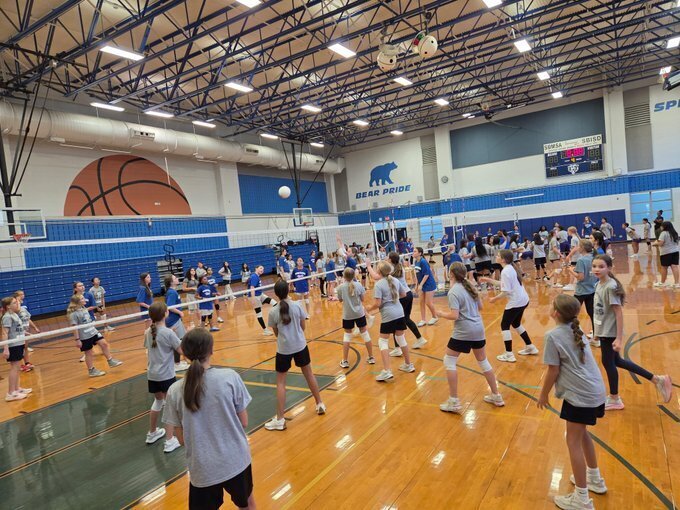
For the student coaches, the clinic offered a different perspective on the sport. They taught skills, encouraged younger athletes and experienced the satisfaction of watching someone else succeed.
For the sixth-grade participants, learning from students closer to their own age created a welcoming environment where they could try new skills, ask questions and gain confidence. Dawn Dalcour, assistant campus athletic coordinator at Spring Woods Middle School, said the student-led format appeared to make the experience especially engaging.
“The girls were excited to learn from actual players,” Dalcour said. “I think they were more receptive to learning in a student-led space because it made them more comfortable. They relaxed more and seemed to have more fun.”
That enthusiasm also helped build excitement for future opportunities to participate in school athletics.
Beyond the skills practiced on the court, students built connections across campuses. Whitney said participants enjoyed learning from their older peers and making friends at their own schools and neighboring campuses.
Their collaboration reflected the Texas Way’s emphasis on respect for others. By creating a welcoming experience for younger students, the players demonstrated leadership that helped others feel included and supported.
Organizers hoped to expand the clinic the following year, giving more students opportunities to lead, teach and encourage others.
The lessons learned on the court extended far beyond the clinic. Older students discovered what it meant to help someone else improve, while younger students learned from peers who were once in their position.
Together, they showed how school athletics helped students build skills beyond competition.
Learn more about the Texas Way.